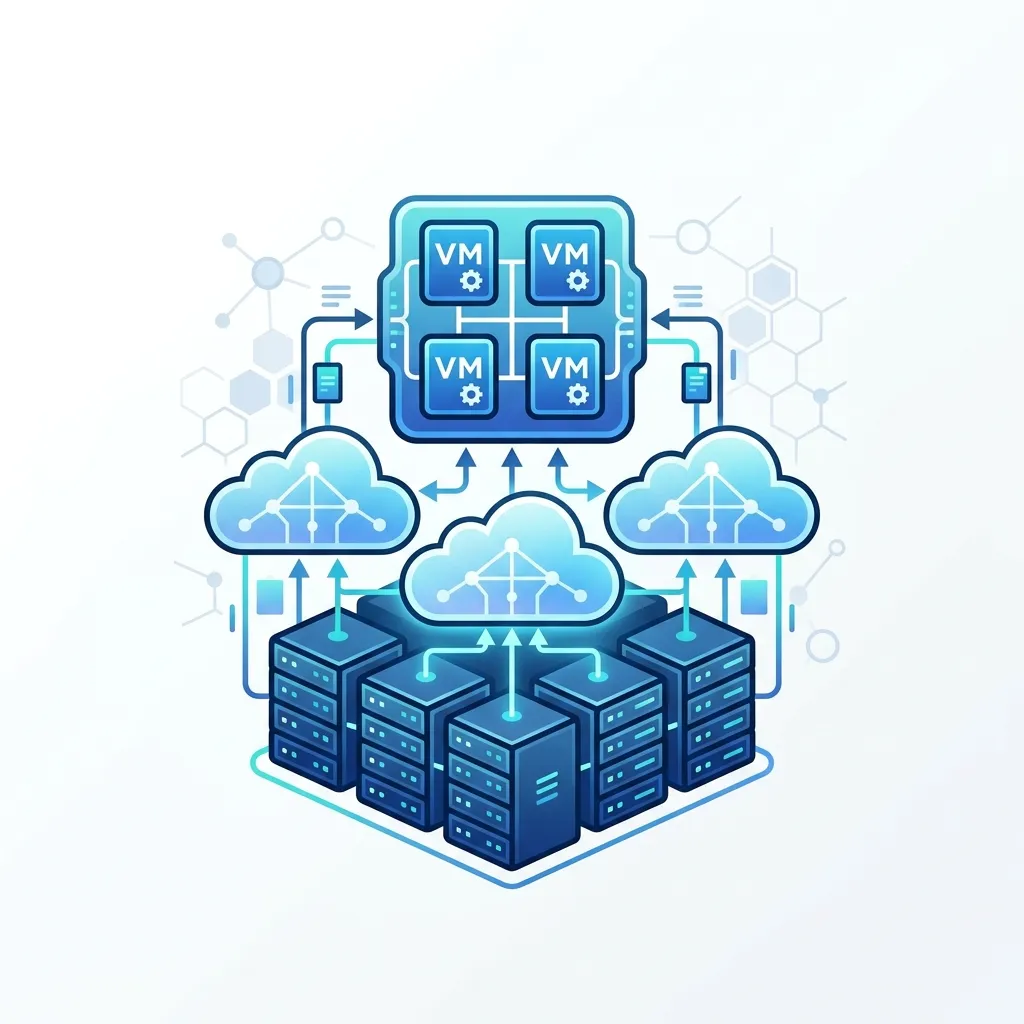
As enterprises continue their rapid expansion into multi-cloud environments, managing infrastructure spend while maintaining performance has become a critical operational bottleneck. Among all containerized tools, Kubernetes (K8s) remains the baseline orchestrator of modern cloud services. However, operating cluster orchestration at scale without robust resource boundaries leads directly to cloud resource waste—frequently resulting in up to 40% in wasted compute resources.
Achieving true cloud cost optimization requires a combined approach of precise node configuration, horizontal pod scaling, and continuous FinOps auditing. In this guide, we dive into the core patterns Gleyon uses to help scaling enterprises reduce infrastructure overhead by up to 78% while preserving 99.99% uptime.
1. Precision Sizing and Compute Resource Limits
One of the most common mistakes in DevOps orchestration is the over-allocation of CPU and memory requests. Developers often specify resource request sizes based on hypothetical peak limits rather than historic actual usage metrics, causing the cluster scheduler to over-provision underlying VM nodes.
"To run Kubernetes efficiently, your container resource requests must reflect actual workload baselines, while limits should act strictly as safety guardrails."
By enforcing accurate resource requests and using Vertical Pod Autoscalers (VPA) in recommendation mode, you can automatically capture and analyze actual container consumption trends. This ensures container instances are scheduled efficiently onto minimal hardware, preventing high idle-capacity billing.
2. Harnessing Spot Instances Safely
Spot instances (or preemptible VMs) offer up to 90% savings compared to standard on-demand compute nodes. However, cloud providers can reclaim spot VMs with only a 30-second warning, making them highly volatile for production systems.
To use spot VMs safely for enterprise workloads, Gleyon deploys mixed node groups managed by intelligent node managers like Karpenter or AWS Autoscaling Groups. By assigning stateless helper pods and non-critical CI/CD pipelines to spot node pools while reserving critical databases and stateful processes for on-demand nodes, you can drastically reduce overall system costs without compromising reliability.
3. Implementing Horizontal Pod Autoscaling (HPA)
Relying on standard resource thresholds (like 80% CPU usage) to trigger scale events is often too slow to handle sudden transaction spikes. Modern container autoscaling must leverage custom metrics, such as concurrent request counts or message broker queue depths, to pre-emptively scale out replica groups.
apiVersion: autoscaling/v2
kind: HorizontalPodAutoscaler
metadata:
  name: edge-service-hpa
spec:
  scaleTargetRef:
    apiVersion: apps/v1
    kind: Deployment
    name: edge-service
  minReplicas: 4
  maxReplicas: 64
  metrics:
  - type: Resource
    resource:
      name: cpu
      target:
        type: Utilization
        averageUtilization: 70
Using granular scaling rules ensures your application only consumes expensive compute resources when actively processing real customer demand, scaling down immediately during traffic lulls to save costs.
Optimizing Kubernetes at scale is not a one-time project; it is an ongoing engineering commitment. By combining precision resource requests, mixed node groups, and dynamic metrics-driven scaling, modern enterprises can build resilient infrastructure that scales gracefully alongside business growth.